
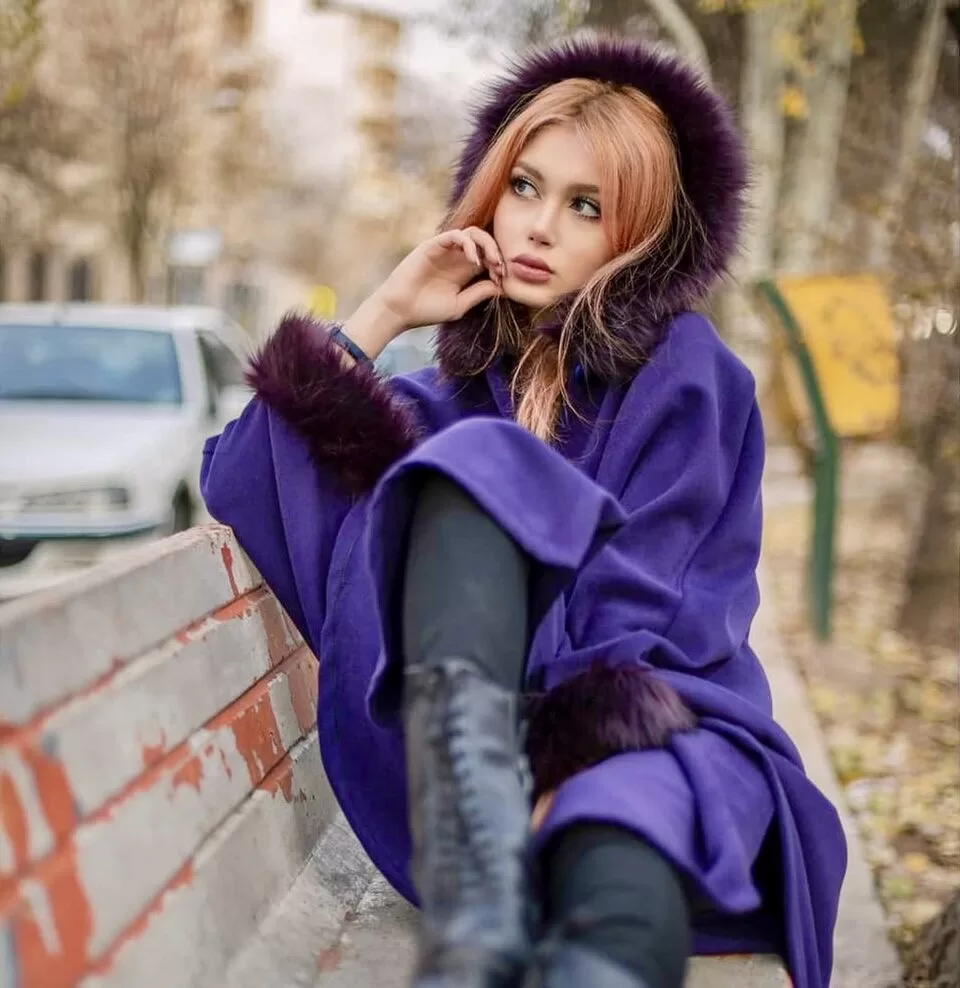
Persian women are known for their distinctive beauty, so it comes as no surprise that many are rising to the top in the worlds of television, entertainment, and fashion. Claudia Lynx, Shermine Shahrivar, Aylar Lie, and Sahar Biniaz are among the women who have made it big in the fashion scene. Over the years, Persian women’s fashion has been marked by glamor, regality, and luxury.
“PERSIAN STYLE IS BRAND HEAVY AND BRAND CONSCIOUS, BUT ALSO CULTURALLY, THERE’S A REAL APPRECIATION FOR CRAFTSMANSHIP AND QUALITY.” – BARDIA ZEINALI (VOGUE.COM)
Prior to the Islamic Revolution of 1979, Iran was known as one of the most fashion-forward countries in the Middle East. Under the Shah, who was bent on modernizing the country, Iran had become secularized and prosperous, elements reflected in women’s fashion.
Images dating from that period feature models keeping up with the latest global fashion trends. Women’s hairstyles were as versatile as those in any European fashion magazine, with models sporting perms, glossy curls, or straight locks.
After the Revolution, hijab and chastity laws were enforced throughout the country. Women were required to cover their hair and most of their bodies in public. Even with a strict dress code in place, many women in Iran remain savvy fashionistas, often pushing boundaries to look stylish and express their individuality in bold ways.
Fashion designers in Iran use their creativity to transform the traditional hijab into something more chic, updating traditional Iranian fashion for a young, contemporary market. Fashion shows have become increasingly popular in Tehran and other major Iranian cities, even while authorities force the industry to comply with “religious standards.”
Iranian fashion designers often draw on Iran’s rich history, incorporating textile patterns, calligraphy, and poetry into their contemporary designs. Naghmeh Kiumarsi, a leader in modern fashion in Iran today, is known for her intricate embroidery featuring Iranian calligraphy and geometric motifs.
While her work primarily targets an Iranian audience, she is gaining worldwide recognition, having recently launched her brand in the UAE. Her recent collection, “Remember to Fly,” conveys the message that the sky is the limit.
“IF WE WANT TO KISS THE SKY, WE SHOULD REMEMBER TO FLY AND NOT BE AFRAID” – KIUMARSI
Nima Behnoud’s interest in fashion was sparked by Tehran’s underground party scene in the 1980s. He left Iran in the mid-nineties to study fashion design in New York City, where he later launched his brand, NIMANY.
His signature style involves silk-screening Persian typography, calligraphy, and poetry onto vintage items, transforming them into contemporary pieces. His works have appeared in major publications, including Vogue, Maxim, and the Washington Times. Jim Carrey, Heidi Klum, and Kevin Spacey are among the celebrities who have sported his brand.
To legally work in Iran’s fashion industry, professionals must obtain permits authorized by the Islamic government. Members of the fashion industry must be careful not to engage in activities that could be interpreted as Western or anti-Islamic. Increasing pressure and restrictions are forcing many people to leave the industry altogether or emigrate to pursue their profession freely.
Over the past year, fashion photographers, models, designers, and makeup artists have been arrested en masse, facing accusations of “encouraging prostitution,” “promoting corruption,” and spreading a “Western-style culture of nudity.” In addition to serving jail time, several individuals were banned from traveling abroad or continuing their professions for at least two years upon release.
The crackdown also targeted female models who appeared on social media without headscarves. Elham Arab, known for her blonde hair, doll-like looks, and wedding-dress photo shoots, was a leading model who was forced to give a public self-critique after being accused of “promoting Western promiscuity” for posting photos of herself on Instagram with her hair uncovered.
Despite laws and restrictions on their dress, women in Iran continue to defy the odds, challenging mainstream media portrayals of Iran as a dark, colorless society where women are covered head-to-toe in black. They continue to shape their identities and maintain their own style, demonstrating courage and innovation in their fashion choices.
Women should be free to clothe themselves as they wish and go about their everyday lives without fear of repercussions for their appearance. Whether it is a mandatory hijab in Iran or hijab bans in Europe, current laws dictate how women are to dress, restricting their freedom of choice.
One fundamental aspect of embracing freedom in society is the ability to express ourselves, provided we do not impede others’ freedom. Fashion’s capacity to empower and liberate can never be overstated. If experimenting with fashion means bringing about a revolution, so much the better!