
Iceland is THE place to go nowadays.
Celebrated for its pristine, ethereal beauty and distinctive way of life, Iceland has experienced a surge in tourism over the past couple of years. In 2015, CNN Travel named Iceland the world’s most peaceful destination. These days, it seems like everyone is flying to Reykjavik to experience the essence of Nordic cool. But what truly puts Iceland on the map is its unique design. Renowned for its fashion-forwardness and quirky, offbeat style, Iceland is becoming a major fashion hotspot.
Fashion is known to reflect the culture from which it emerges, and in Iceland, feminism runs deep. As citizens of the first European country to elect a female president and the first country in the world with a political party entirely formed and led by women, it is not surprising that women quite literally run their world in Iceland. “Icelandic girls do, wear, and say whatever they want – without caring about what others think,” says Bryna Jonbjarnardottir, one of Iceland’s emerging models.
Icelandic fashion also reflects the country’s reputation as one of the most sustainable places on the planet. According to Professor Charles Talcott, who led a group of AUP students on a cultural excursion to Iceland over spring break, the very spirit and philosophy of Iceland’s clothing lines are consistent with the country’s commitment to sustainability. “What’s striking in Iceland is to see that not only are many clothing lines named after natural features such as Geysir or 66 North, the designers are also inspired by the natural features, the textures, the colors, the light, and the natural products of Iceland to create their lines, to create the kinds of figures and forms of their clothing,” he says.
“Of course, they’re also using native materials and natural fibers, and they’re highlighting this for the consumer. It actually becomes part of the brand, part of the promotion, part of the ethic of the line. And you see that profiled even within the shops: the clothes on display are always blended in the natural elements.”
The Reykjavik Fashion Festival is Iceland’s most popular artistic celebration, drawing fashion enthusiasts, bloggers, and professionals from around the world. Founded in 2009, the festival provides a venue for Icelandic designers to showcase their work. This year’s festival, held from March 23rd to the 25th, featured six Icelandic brands making their fashion debuts: Anita Hirlekar, Cintamani, Myrka, Inklaw, and Another Creation. Challenging norms, inspired by natural elements, and mindful of their surroundings, the designers behind these brands are dedicated to representing their Icelandic heritage. In keeping with Iceland’s heritage of sustainability, they aim to create a fashion space where consciousness meets creativity.
Named as one of the upcoming Nordic designers by Elle DK and Vogue Italia, Anita Hirlekar features modern sophistication and unexpected juxtapositions through its strong colors and textures.
Drawing on Icelandic nature to create dependable outdoor clothing, Cintamani is dedicated to making the nature-loving individual look great by combining advanced technology with a fashion-forward sensibility.
Inspired by Viking heritage and Iceland’s mystical landscape, Myrka is founded on the idea that quality clothing should be produced in a socially conscious manner. Through artful prints blended in sharp silhouettes and soft, feminine pieces, Myrka enables women to express their individuality.
Winner of numerous local design awards, Magnea‘s innovative knitwear features a distinctive mix of contrasting materials and meticulous attention to delicate details that evoke the Icelandic landscape itself.
The newest addition to Iceland’s fashion scene, Inklaw features a minimalist, functional, and street-influenced design. Inklaw’s team sends a personal note with every delivery, and almost every clothing item is made-to-order in the Reykjavik-based studio.
With a strong vision to raise awareness of waste in the fashion industry, every item under Another Creation’s brand is produced in accordance with fair trade standards. Simplicity meets sustainability in classic, timeless shapes that are meant to last more than one season.
Kolfinna Von Arnardottir, the festival’s CEO, has high hopes for Icelandic fashion and the future of Icelandic design. “It has been difficult getting buyers to come to Iceland…the obvious is the size of the country, another is that experienced and big buyers look to a designer’s history. But now there is a lot of growth here, and production has much increased,” she says in an interview with Iceland Monitor.
With its abundance of natural pools and geothermal waters, Iceland boasts a unique bathing culture dating back to the 12th century. Swimming is part of daily life in Iceland. When designer and avid swimmer Erna Bergmann felt that many of the swimsuits she saw on Icelandic women were either too sexy or too sporty, she created her own swimwear label, Swimslow. Bergmann’s aim is for women to feel comfortable and confident in a Swimslow swimsuit. Consistent with Iceland’s tradition of sustainability, all swimsuits in the label are made from recyclable, high-quality fabrics.
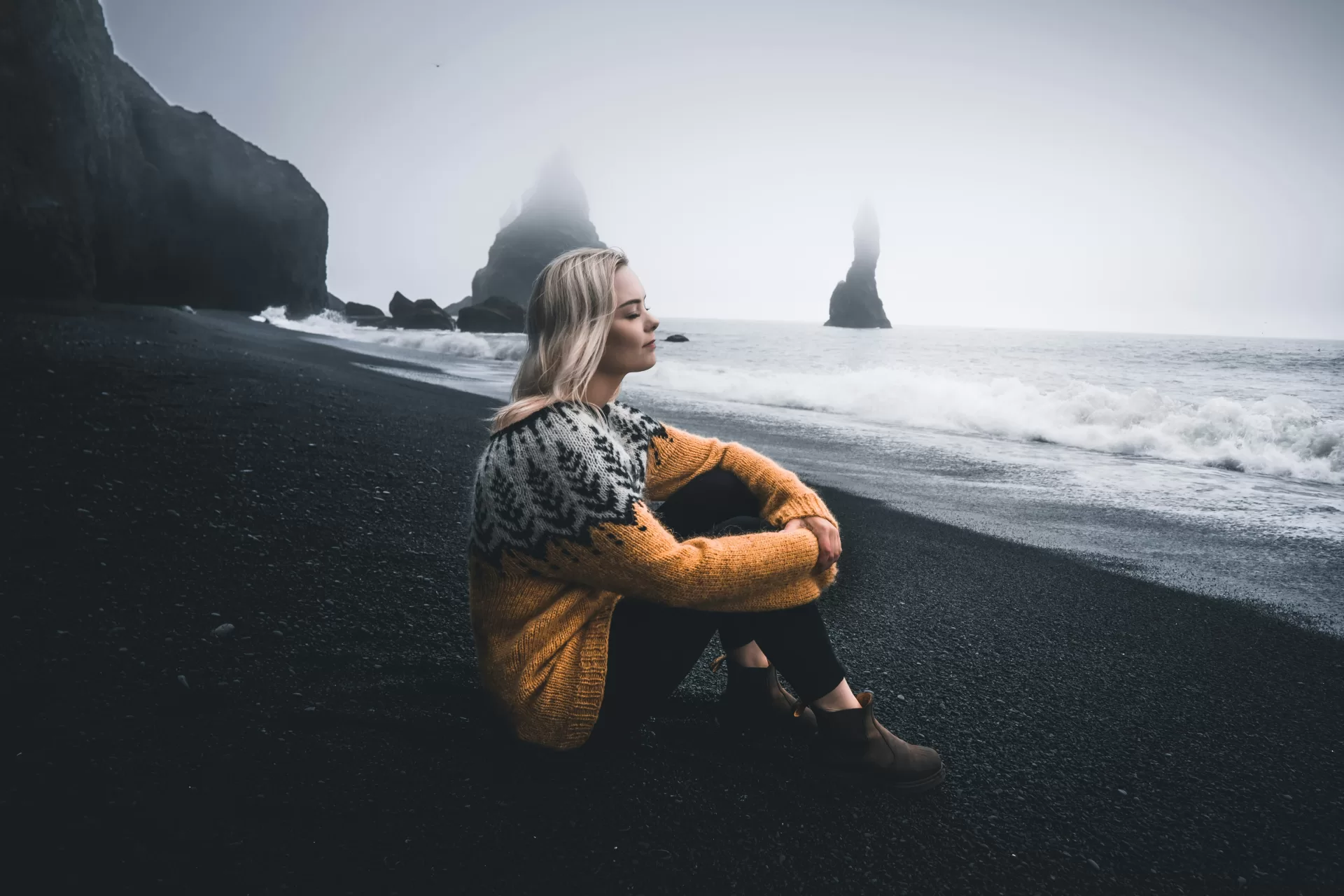
Like its fashion design, Iceland has a quirky, offbeat weather pattern. Icelanders typically experience snow, hail, rain, and sun in a short period. Should you arrive in Iceland and find you’re not sufficiently warm, pick up a lopapeysa, the quintessential Icelandic sweater you’ll see all over the region. Lopi, the unique wool used to make the sweater, provides insulation and repels water, so the lopapeysa keeps you warm even when wet. This Icelandic sweater is distinguishable by its yoke design – a wide decorative pattern surrounding the neck area.
With few international fashion brands in the region, many Icelandic designers have had to demonstrate greater innovation and creativity in their designs. Walking around Reykjavik, it is interesting to see locals express themselves through their style, unconstrained by traditional and conventional ideas of clothing. It inspires all of us to embrace a new way of thinking and to stay true to our own unique style.